Artificial intelligence coding agents are cutting off our pipeline of new software developers. That led me to wonder if I am the last person to will ever learn Rust?
Learning Rust from scratch to the point where I could write my website software was an 12 month effort which began properly in mid-2025. My starting point was many years of developing in Java and Python. To slow my progress, all coding happened outside of work, squeezed in at coffee shops, during lunch breaks or the train home at night. It could definitely have been quicker, but maybe not that much so once everything is balanced out. Suffice to say it was a huge commitment and strained my resolution to the limit. It was certainly not a casual skill acquisition.
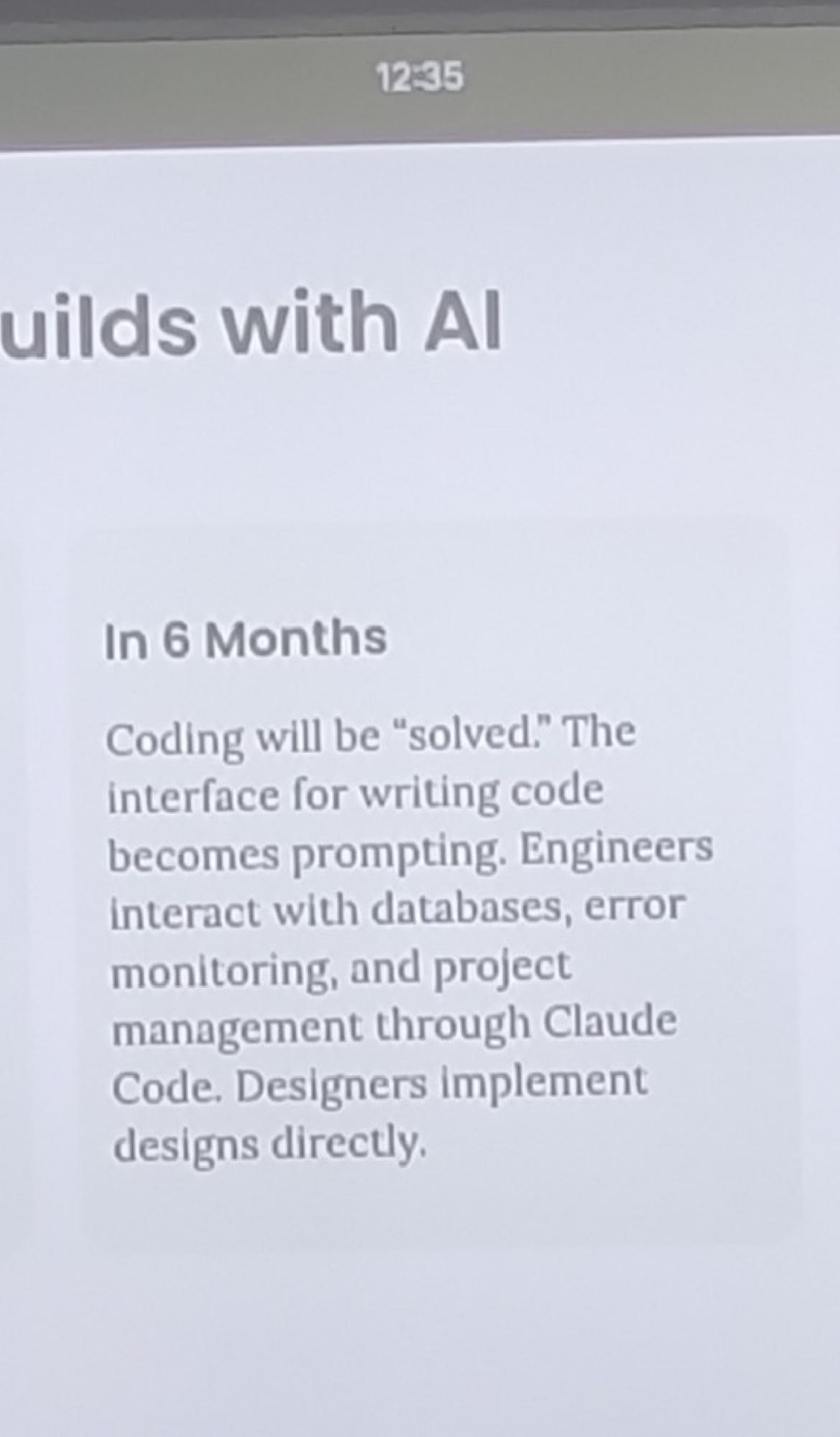
I do wonder though, having witnessed the advent of AI assisted coding, if future generations will learn programming languages in depth. Coding from scratch is replaced by prompting an AI to write code for you. If you think I am being over dramatic, then see this screenshot from an Anthropic presentation earlier this year, "Designers implement designs directly". This transformation has happened so swiftly and yet here we are. My industry will not return to as it was and we must all grapple with the consequences. So will developers ever spend that time learning the intricacies, idioms and basic syntax of programming in a new language for themselves?
Business is driving this change and in the short term at least they could save money with less engineers. Money spent on tokens instead of fallible, messy, demanding and emotional human beings. But in doing so, the pipeline of new coding talent has been halted. Riding instead on the experience of older developers whose role has narrowed to be AI-prompters and code reviewers. Having spent decades in the trenches learning it all for themselves, they know a lot of what the AI knows. But this duplication of effort, where countless developers all learn the same lessons, is over. That learning is now centralised and the dependence on a human developer can only diminish with no new development talent coming through.
The immediate consequences for developers are a complete re-evaluation of their role. Perhaps they will find themselves in a sweet spot which they could ride out for months or maybe years. During this period they are advised/encouraged/forced to let AI do the hard work. They deliver the same with less effort or more with the same effort. They rarely writes code and a fundamental aspect of their job which they enjoyed is now gone.
For the junior developer, AI builds code faster and nobody has time to wait for them to figure it out. The AI assists and guides as they write, or just builds it all from a decent specification. The graduate who delivers first and fast is the one that will prevail. The engineer who realises code is being written that they could not write themselves and interrupts to take control will struggle.
There are no noticeable disadvantages for the business to begin with, yet they are left with a slightly worrying conundrum. Who will understand their platforms, their systems and their products in future? For short-term benefits they have embraced AI without considering where this will leave them in years to come. The old developers will be paid off in time and the next generation will be unable to implement improvements or diagnose issues for themselves.
In the past skilled draughtsmen gave up their pencils and paper to make way for CAD. Architect desk makers, paper mills and pencil makers all lost business. Then the hardware engineer who used to put the disks in a new Sun server, install the Solaris OS and put it on the internet is no longer required. We just click buttons on the cloud console instead. That capability is now absent from most tech firms. But these abstractions are good right? They move the detail further away and release us to perform higher level tasks.
So is this really any different? I think it is the next step on an existing trajectory. But the way it is different is that jobs are subsumed & centralized at a much higher level by AI, similar to the cloud transformation and strategically important capabilities disappear. Here is my snazzy table to and show the changes:
| Year | Phase | Transformation | Role | Job, skill & self-sufficiency |
|---|---|---|---|---|
| 2000 | Computerize | Digitization of professions | Draughtsman | Jobs change, skills retained and rely on many software providers |
| 2015 | Centralize | Cloud computing | OS/Hardware Engineer | Jobs change, skills lost and rely on a few cloud providers |
| 2030 | Assimilate | Artificial intelligence | Software Developer | Jobs lost, skills lost and cannot operate independently |
Retaining these skills enables technological independence and self-sufficiency. If not widely understood they will be further centralised into single powerful entities. We need to cultivate them locally in present & future workplaces. If not, everyone outside the central monoliths will lose even more than we already have.
From this view point, learning Rust and writing my website software all from scratch was not simply a hobbyist project, maybe it was also a very, very small act of defiance against the AI tide. And it may also explain why the software for this website is not open source, but that is a topic for another day.