I am not planning to do a travel blog for every holiday, but this one seemed worthwhile. Sometimes things are more different than you might expect.
We just spent a top week in Italy, four days in the north and four days in Rome. Although I have visited twice before, many small and unexpected differences caught my attention. Features of this flamboyant country which make it feel very differnt to the United Kingdom. Well of course it is different, one might say, but as tourism and capitalism homogenise so much, it can actually still be a big surprise to discover that things do not always operate as you might assume.
So here are the three things about Italy that surprised me on our latest visit.
1. Taxi Trauma
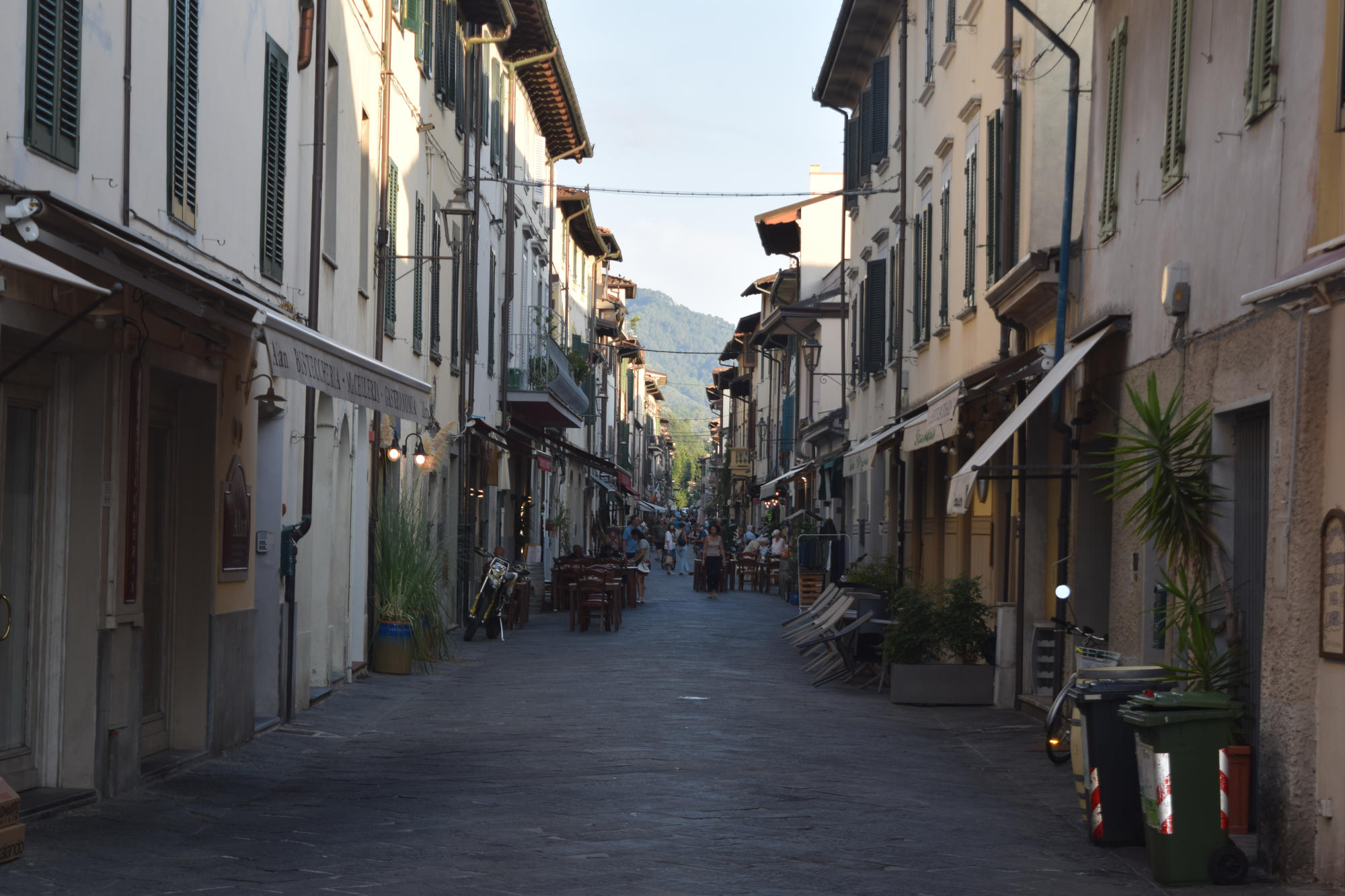
After two evenings on the coast at Lido Di Camaiore we decided it would be good to venture away from the resort and see Camaiore, the inland, rural pair of the it's coastal cousin. A traditional town with narrow cobble streets, huge ancient church with bells, abundant cafés and restaurants where seating spills out front for casual open air dining. Surrounded by the steep and impressively high Apuane Alps, we enjoyed a memorable meal at a recommended restaurant (Caffé Centrale), with pappa de pomodorro and penne ragu, with a lovely bottle of local Vermentino. Our problems only emerged when it was time to head back.
We reached Camaiore after a short but expensive taxi journey from our hotel. Although we had a really delightful meal, there was a twinge of worry for me regarding our homeward journey. Taxi ranks were not evident. As we wandered back to the main square I tried a couple of numbers I had saved for this very occasion. One was dead but the other was answered by a handler who thankfully knew English but was unable to help us without an exact address. After battling to give my current location we were put on hold and then the line dropped. The helpful gelato server with excellent English also had the same experience after being handed my phone, leaving us then to wander around the main square and wonder why this was so difficult. After all three of our best ideas were unsuccessful, we were left with shamefully calling our infinitely patient hotel owner. Just like on the night of our arrival at the local train station, he was called upon to save his easily confused guests from the unknown territories beyond the immediate vicinity of his hotel. On our safe return we once again expressed our thanks to our saviour, the hotel owner Mr Ricci (along with his sister), who sort of apologised for nonexistent local private hire services and their associated cost.
We spent the same on two ten minute taxi journeys as we did on the meal, which is reflection of both the extremely high cost of taxis and the extremely well priced cost of the eating out at local restaurants. Ignorant tourists such as myself assume everywhere will automatically cater for their every need, even those off the beaten track.
2. Trains not Planes
Trains in the UK are a pitiful affair. Although marginally improving in recent years with the Scottish government taking them back in to public ownership, any longer distance attempts are likely to have issues. We had to abort a winter journey from London to Glasgow at Preston recently due to a line closure, then stay an unplanned overnight at the Travel Lodge and then navigate the final stretch on a busy MegaBus full of similarly stressed travelers. A recent weekend trip to Manchester had to happen via electric car with multiple charging stops due the complicated set of changes on the return leg on a Sunday. Even though we were traveling between the second cities of both Scotland and England, it would have required three train changes, switching between franchises and operators at every step. Finally, it is known that, per-minute, the train journey from Glasgow to Edinburgh is one of the most expensive in the country at peak times.
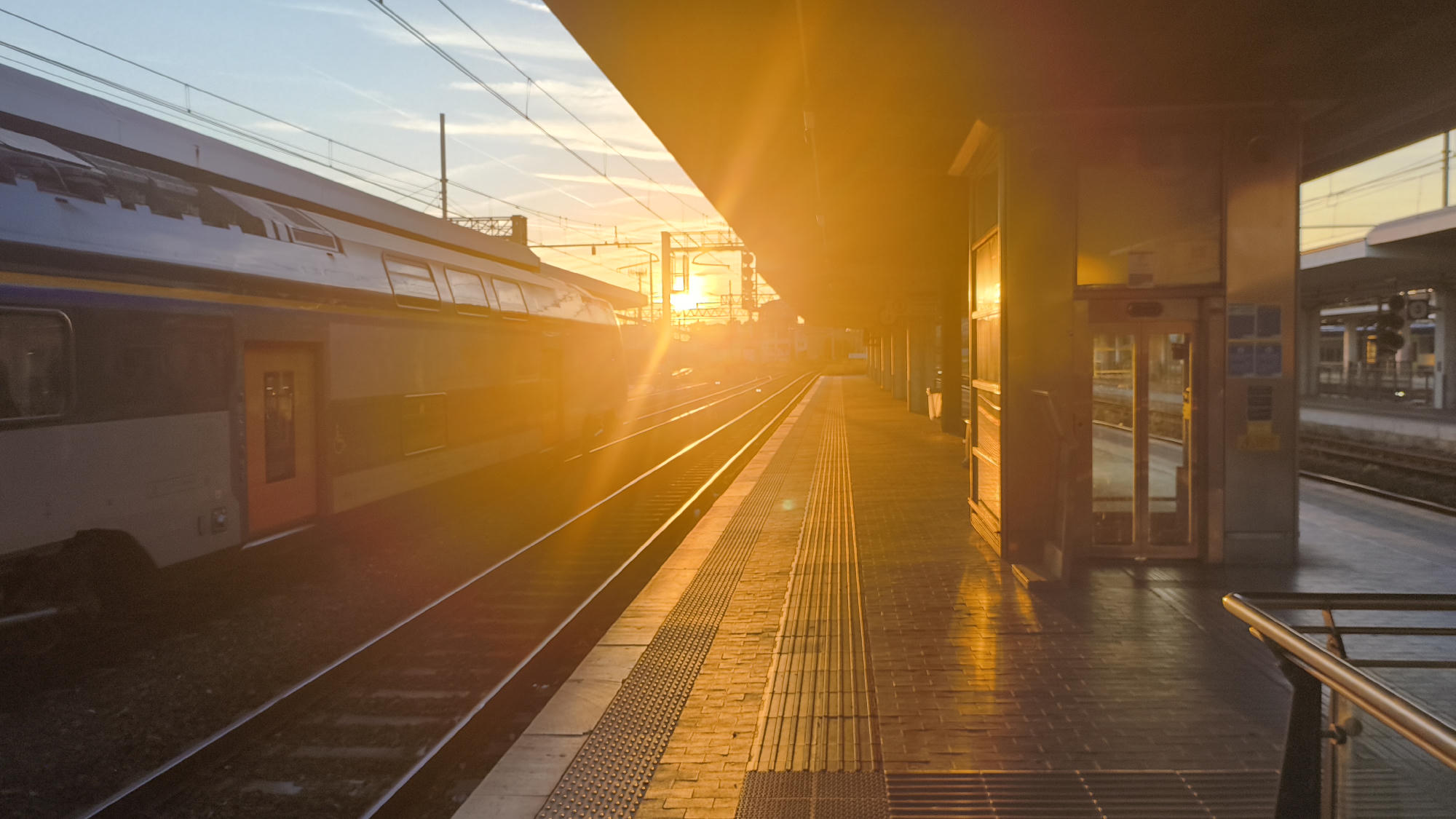
So to see the wonderful simplicity of a well-funded national train operator able to provide a fast and fairly priced service was a marvel to the jaded British traveler. Trains leave from pre-planned platforms that are known so far in advance they are printed on huge easy to read timetables, as well as on electronic boards and announced in Italian and English. The trains themselves are comparatively vast with plenty of space for suitcases all down the carriage. (Until writing this blog I had assumed this was due to a narrower gauge of rail, but the internet informs me that the gauge is the same across most of Europe, but in the UK we built all our tunnels and bridges for smaller carriages and never widened them, leaving us with a significantly inferior setup.) When traveling, well-dressed train conductors attend to passengers and check tickets. On our Viareggio to Rome journey the train, even though an older model without the bullet shaped lead engine or the Ferrari-red paint job, it was flying along and obviously tilted for the bends.

Having witnessed the national embarrassment of HS2, it was a pleasure to find that long distance train travel is not just the domain of the efficient Swiss or the forward-thinking French. Italy is 100% up-there with them and operates their service with enviable efficiency. And is a mode of transport we in the UK can frankly only dream of.
3. Engineering Envy
UK manufacturing accounts for a very small proportion of our economy. Italy still seems to be able to build stuff, a quick search shows that it second in Europe behind Germany. I noticed several really small things that just delighted me and demonstrated a local capability that we no longer seem to have. And this is all without visiting the industrial heartlands of the around Milan and Turin, home of the famous car industry and much more.
- The Carabinieri are extremely visible in Rome, particularly around busy train stations. Their presence never bothered me, in fact it probably made me feel they were making a visible effort to make their city feel safe. Every officer is armed, whether they are obviously newer recruits or time-served experienced officers. Their guns were in a holster which was on a cable and clipped over with a cover to ensure no-one could grab it. They designated firearm is a Beretta 92, which is made in Italy. To have the technical capability and national will to build these locally seemed like an extremely sensible strategy in an era when erstwhile allies can change sides.
- In Camaiore there was a market which appeared on the wide beach promenade on a Monday morning. Vans would appear and sellers would spread their wares for sale on make-shift tables, shelves or hangers. The selling stall was all based around their van, which had a clever hydraulic folding roof. At the end of the day, after carefully preparing the awnings, the operator could use a lever behind the drivers seat to draw all the supports together and then fold them over before a final tilt and they would all disappear into the metal roof box. The setups were obviously custom-made, modified by specialists to convert any van to a mobile market stall with full rain protection. The roof boxes were made of simple folded steel and the folding mechanisms looked cleverly designed to ensure a small final stowing size. Simple and clever.
- Whilst snoozing on the beach a Lido di Camaiore, I was aware of a very low engine drone that slowly got louder and then receded. As I drew myself up from my slumber, I realised it was tug boat pulling a partially built super-yacht down the coast. There were hull sections only, no windows, no paintwork, no fittings whatsoever, just a rough hull that could then be moved down to a Viareggio boatyard. Here it would be fitted out with every luxury convenience to convert this basic metal chassis into a splendidly refined motor boat or super yacht. Once again I was impressed to see this local business was thriving and obviously providing manufacturing employment for many in the local area.
Not all was idealistically perfect I have to add. Italian clothes shops selling designs in materials that could only be Italian were selling clothes made in China, which disappointed me a bit. And their super-fast trains which looked extremely well built were constructed by Hitachi.